
Appointment with death
Lindsey C. Vickers, The Appointment (1982)

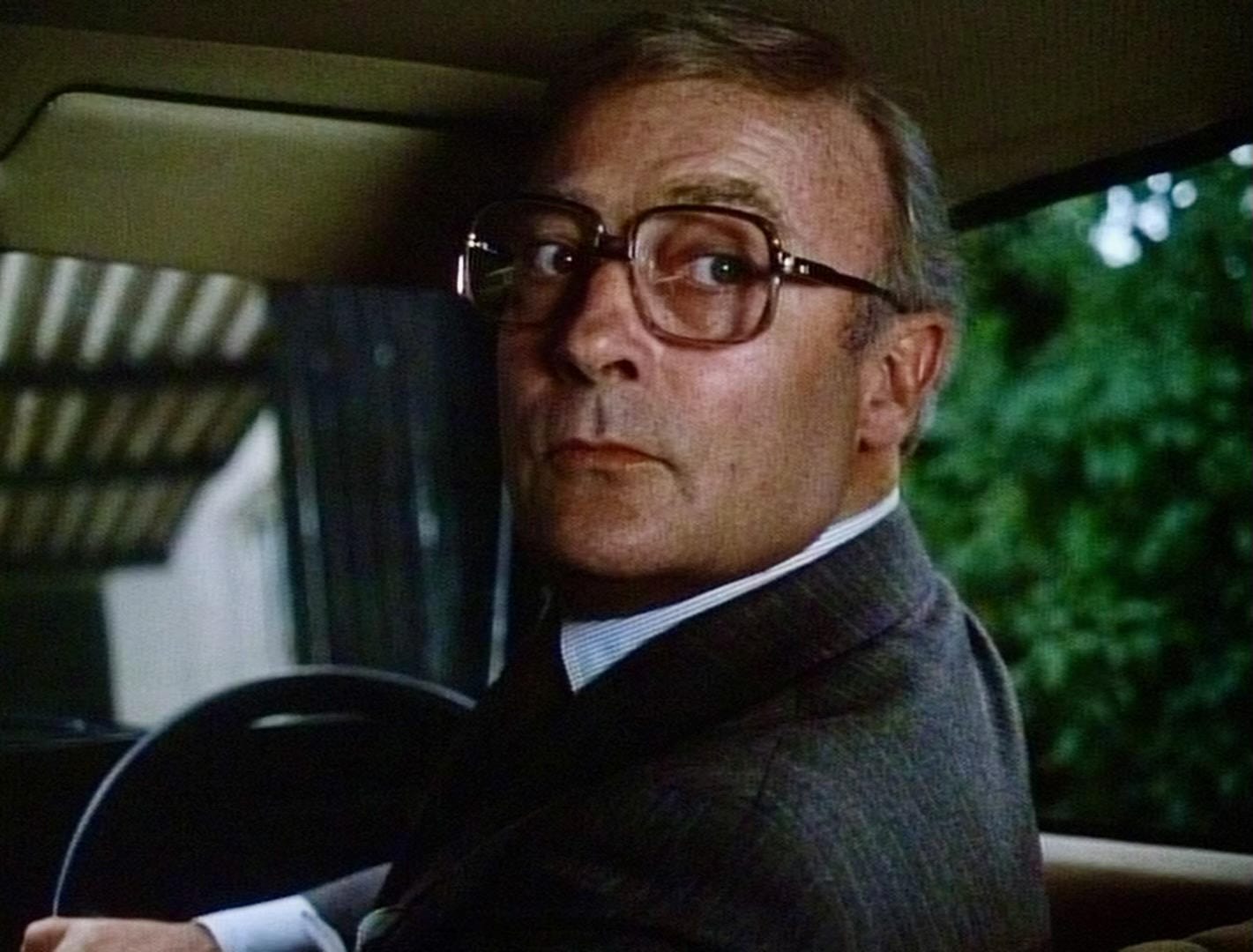
As far back as St Thomas Aquinas we have spoken of the ‘wholeness’ of a work of art, its coherence. Perhaps there is one kind of coherent artwork, perhaps there are several. But there are only two kinds of incoherent art: the coherently incoherent, and the incoherently incoherent. David Lynch’s Mulholland Drive (2001) is an example of the former; Lindsey C. Vickers’s The Appointment (1982) is an example of the latter. The violent cold open is phenomenal, as is the automotive climax, but between the two it’s a patchy work of Oedipal tensions, stilted conversations, destructive dreams and just driving (‘another A-road?’ you mutter, as you reach for your phone).
Edward Woodward lives up to his name in this one: his performance as suburban father Ian is stilted and clunky. Ian’s adolescent daughter Joanne (played, or at the very least attempted, by Samantha Weysom) is a talented violinist, whose precocity annoys her mother Diana (played by Jane Merrow). It’s quite something when the three best actors in the film are three Rottweilers (typecast, yet again, as demon dogs: an affront to the gregarious affections of that breed).
When Ian has to miss Joanne’s violin concert for a work commitment (briefly alluded to as an ‘enquiry’ into an industrial accident), the affluent family home is visited by a tense night of fitful dreams and broken nightmares: Ian sees Diana turn into Joanne, then a brief glimpse of a hideous Rottweiler, then his death in a car accident; Diana also sees Ian die in a car accident; Joanne seemingly dreams of nothing at all. ‘Tell a dream, lose a reader,’ said Henry James, and too long (a third of the film’s overall runtime) is spent on these premonitions. By the twentieth minute of it, you’re actively holding back the urge to say ‘Lindsey, please: put down the Penguin Freud.’
Ian’s drive to the enquiry then comprises the final half hour of the film, and what follows is an exercise in the most basic form of suspense: we know what will happen (in fact we have seen it), the only question is when. HGVs pass close, honking loudly; Ian takes his eyes off the road to retrieve an apple from the glove-box; a miscellaneous fluid leaks from the chassis. ‘Now?’ we ask, as Ian’s car swoops up the side of a mountain, a sheer drop to his left. ‘Now?’ ‘Surely now?’
This suspense is augmented by Trevor Jones’s brilliantly allusive score, which alternates between tensely plodding synths and the thundering sharpness of a full orchestra. Jones would go on to compose the original music for Excalibur (1981), Mississippi Burning (1981), Brassed Off (1996) and Notting Hill (1999), and yet this was director Lindsey C. Vickers’s only feature. The Appointment did not have a theatrical release and was only remastered and republished by the BFI shortly before his death in November 2025. It had been funded by the National Coal Board Pension Fund (the first time a pension fund had been used to finance the entire budget of a film). Much of it was shot on location in Berkshire, Buckinghamshire and Snowdonia National Park (after all, so much of the film is driving), all of it on 35mm. No expense spared.
Throughout the Seventies, Vickers worked variously as second and third assistant director on Hammer horror films, and the three or four moments of sudden violence in The Appointment are remarkably entertaining: a girl snatched by a demonic force in a quiet copse; a mechanic’s head blown up in the engine of the car he’s working on; Ian’s 1-v-1 with gravity. Likewise the wry twist in the very final scene is sufficiently fun that the preceding 90-ish minutes of roundabouts and nightmares seem entirely worth it. It is not a coherent film, it might not even be an entirely good one, but it is still, mostly, an enjoyable one.